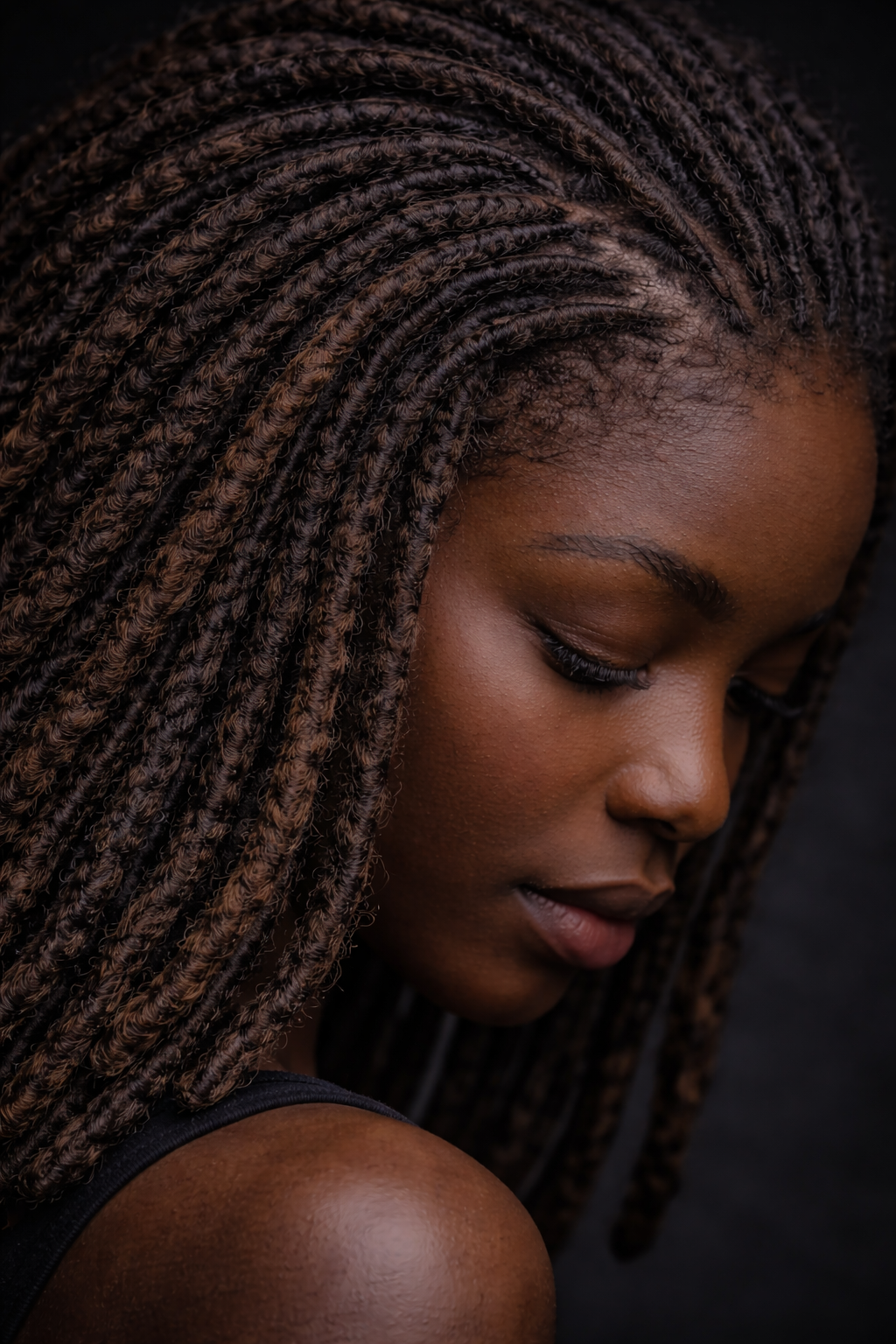
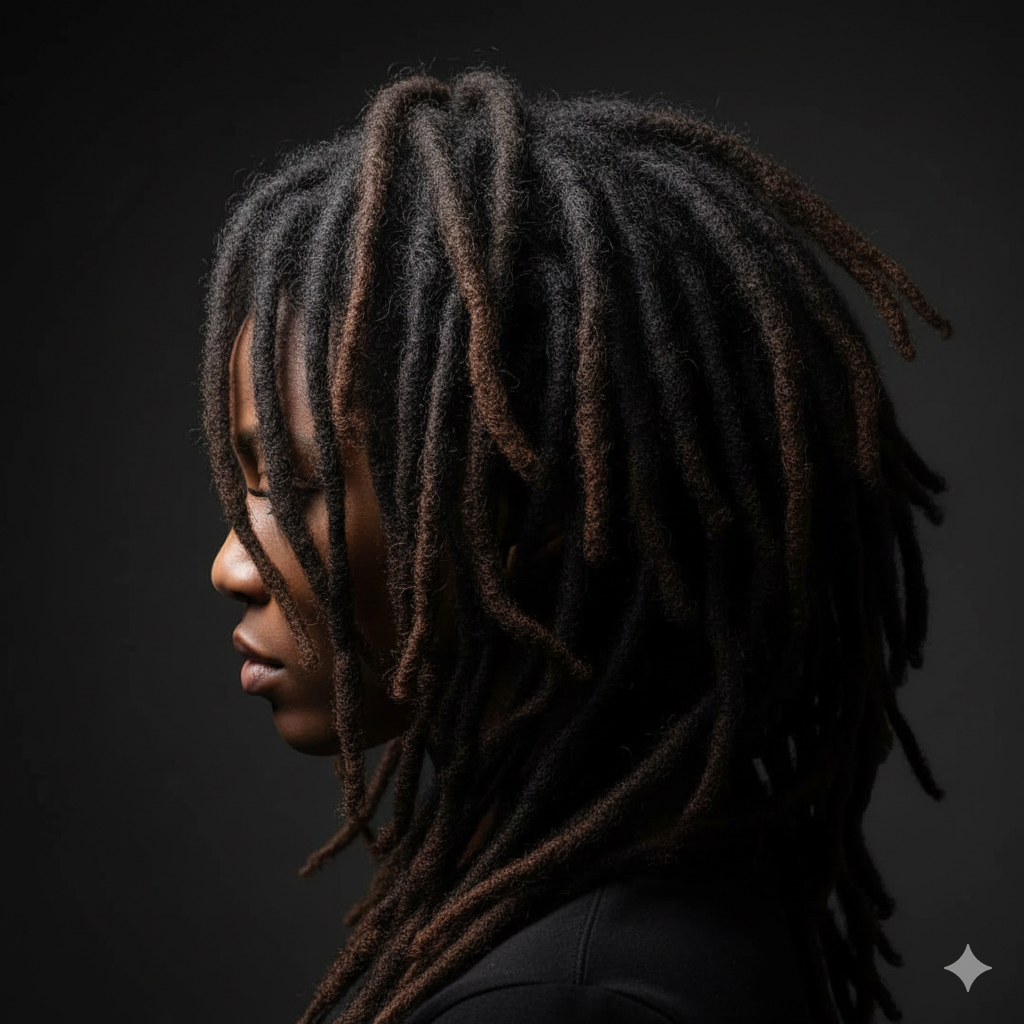
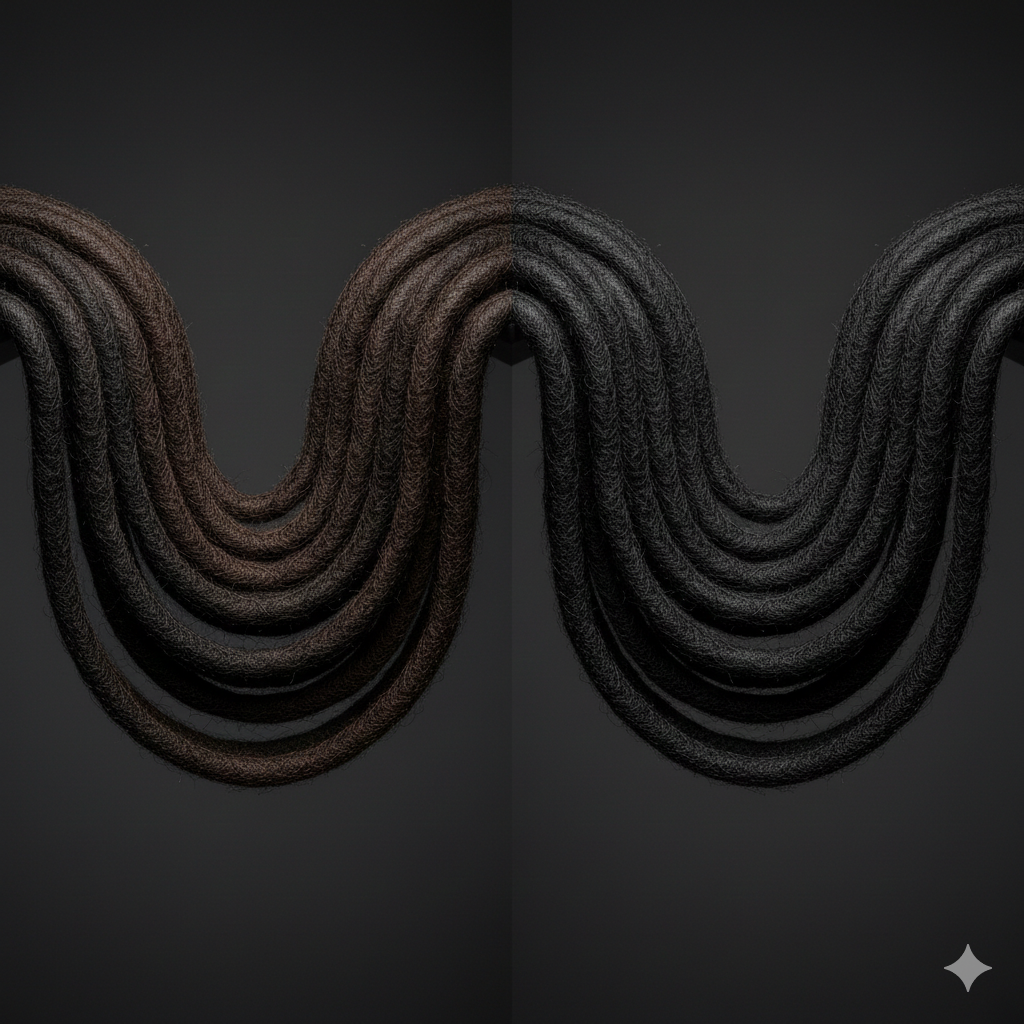
Loc extensions do not mature on their own.
They mature through discipline.
Material and construction set the foundation, but aftercare determines whether locs integrate or remain separate over time.
1. Early Stage: The First Few Weeks
Immediately after installation, the join is at its most vulnerable.
This period requires restraint:
- minimal manipulation
- residue-free products
- patience
Over-styling early on delays integration.
2. Moisture and Texture Response
Human hair responds to moisture the same way natural hair does.
Proper hydration encourages:
- softening
- expansion
- controlled locking
Synthetic fibers resist this process. Human hair welcomes it.
Maturity requires responsiveness.
3. Retwisting and Palm Rolling
Maintenance is not about forcing shape.
It is about guiding structure.
Light, consistent retwisting allows the loc to settle naturally. Palm rolling supports alignment without compression.
Aggression slows maturity.
Consistency accelerates it.
4. The Long View
Months into wear, disciplined aftercare reveals itself.
The loc thickens evenly.
The join blends.
The texture stabilizes.
At this stage, the extension no longer feels added.
It feels assumed.
Final Thoughts
Extensions are not finished at installation.
They are introduced.
How they mature is determined by what happens after.
Care is not cosmetic.
It is structural.