Not all loc extensions are built the same.
Construction matters just as much as material.
One of the most overlooked decisions in loc extensions is whether they are single-ended or double-ended. While both can add length, only one is designed to respect long-term growth and natural maturation.
1. Understanding Single-Ended Construction
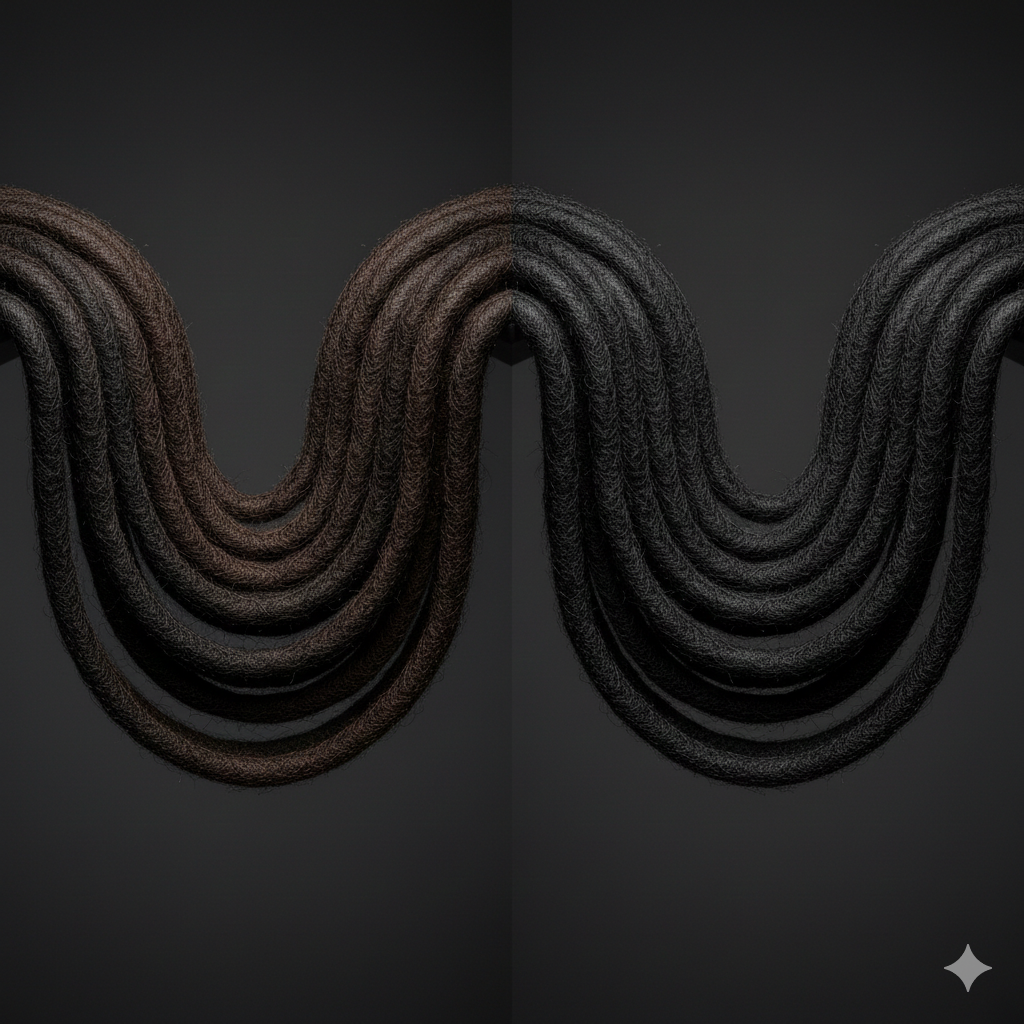
Single-ended loc extensions attach directly at the root. Your natural hair continues growing downward into the extension instead of folding around it.
This creates a rooted, uninterrupted structure that mirrors how natural locs form.
There is no midpoint fold.
No doubled bulk.
No artificial balance correction.
2. Root Health and Scalp Integrity
The scalp tells the truth over time.
Double-ended locs often introduce bulk at the root. This can affect tension, distribution, and comfort as the loc matures.
Single-ended locs distribute weight naturally along the shaft. This reduces stress at the scalp and allows for controlled growth without forcing correction later.
Growth should not need compensation.
3. Seamless Maturation
As your natural hair grows, single-ended locs allow the join to disappear into the structure of the loc itself.
Over time, the boundary between your hair and the extension becomes harder to locate. This is not accidental. It is structural.
Maturity is designed, not styled.
4. Professional Preference
Experienced locticians favor single-ended construction for a reason.
It offers:
- cleaner joins
- predictable growth
- easier long-term maintenance
- better correction control if needed
Precision matters when permanence is the goal.
Final Thoughts
Single-ended locs are not faster.
They are not louder.
They are not shortcuts.
They are intentional.
When the goal is longevity, realism, and structural integrity, construction is not optional.